Thane Creek · Maharashtra
A rose tidebeside the city.
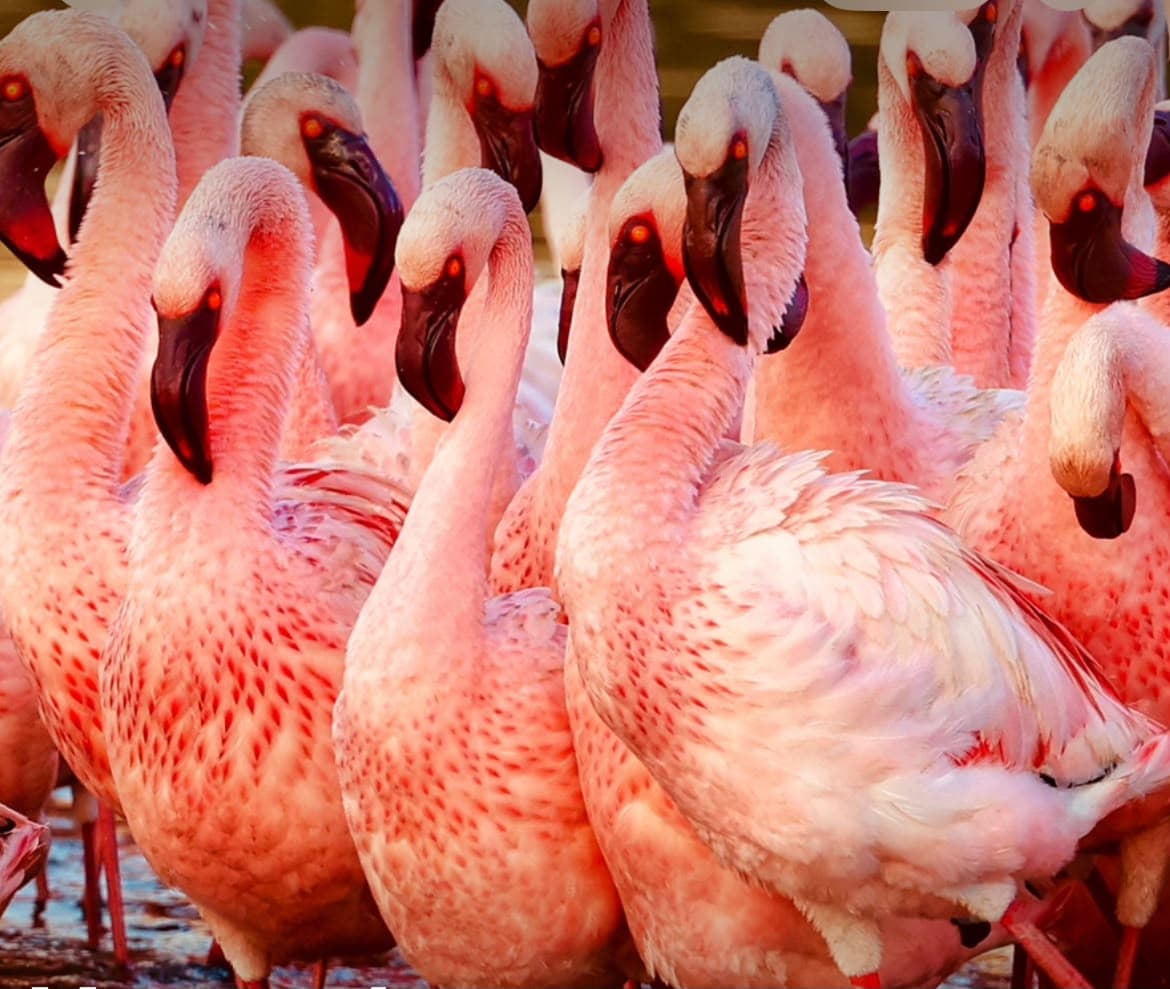
Every winter, tens of thousands of flamingos settle onto the mudflats between Vashi and Airoli — a few kilometres from one of the densest urban areas on earth.
- Thane Creek
- 2015
- 200+
- Jan – Apr
The mudflats
Thane Creek is a tidal estuary fringed with mangrove, running between Mumbai and Navi Mumbai. The birds arrive from Kutch and further west from around November, build through January, and hold until the pre-monsoon heat pushes them back. Lesser flamingos — the smaller, deeper-pink of the two species — make up the overwhelming majority.
Everything about photographing them is dictated by the tide. Too low and the flock is a distant smear across a kilometre of exposed silt; too high and the birds are pushed off the flats entirely. The window is the two hours on either side of a mid-high tide, from a boat, with the light behind you and the city haze doing something extraordinary to the background.
It is also, quietly, one of the most encouraging wildlife stories in India. This is not a remote wilderness. It is a working estuary hemmed in by highways, refineries and high-rises — and it still supports a hundred thousand birds every winter.
Working the tide
- Airoli jetty, boat safari
- Oct – May
- First 90 min after sunrise
- Rising, near high water
- 300–500 mm
- 1/1600 s from a boat
- Advance, tide-dependent
- ~0.0L
Flamingos at peak
- 0+
Bird species
- 0
Hectares protected
- Nov–May
The window
Two frames
Thane Creek, Maharashtra
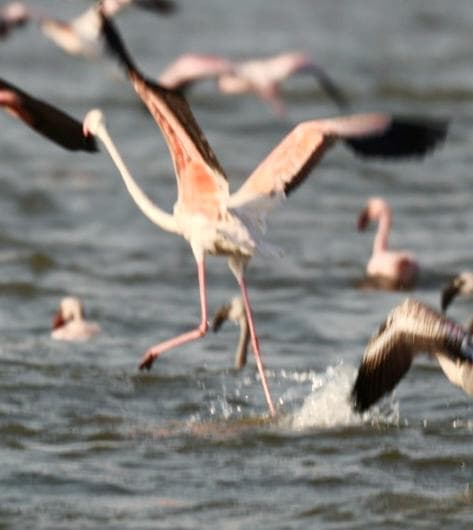
Run-Up
The one variable
The working window. Birds walk towards you as the water pushes them off the flats — two hours, no more.
Field note
Painted storks are common enough that most people stop looking at them, which is a mistake. Get close with a long lens and the head resolves into something extraordinary — bare orange skin, textured like weathered sandstone, running straight into a heavy waxy-yellow bill.
They feed by touch, sweeping a half-open bill through murky water until something brushes it. That behaviour is why they tolerate an approach: a bird hunting by feel is not watching you the way a heron is.
The trick with them is the background. Get low, put a stretch of open water behind the head, and the whole picture reduces to that face against a grey-blue wash.
Next