Skip to content
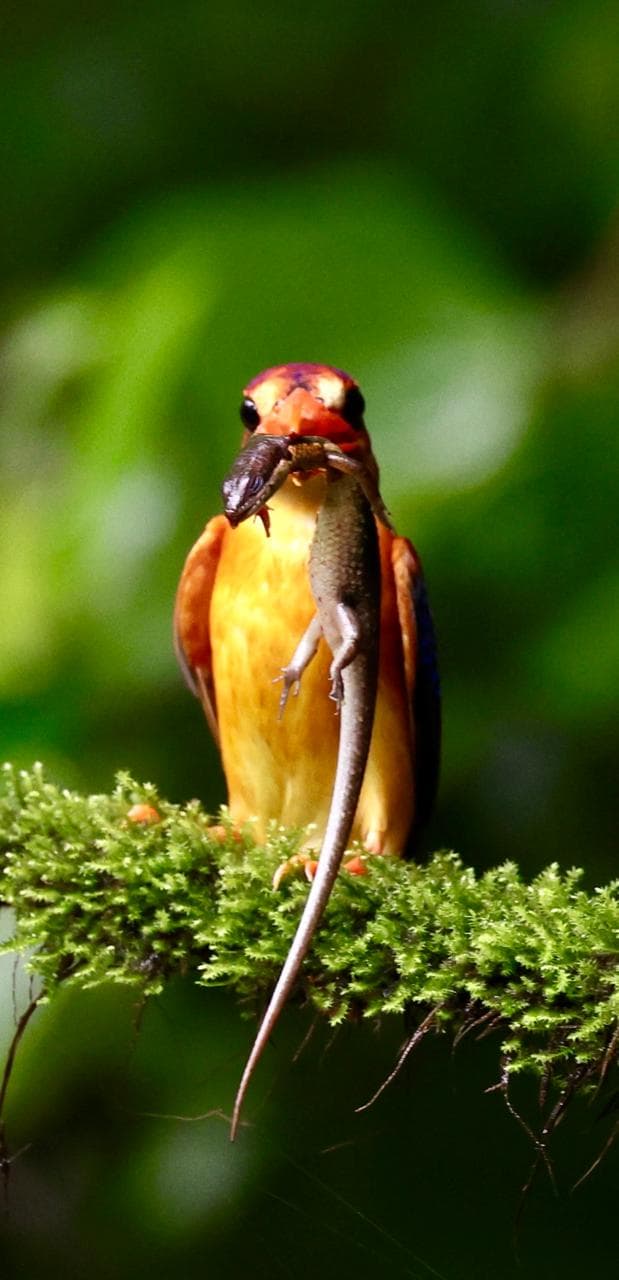
An Oriental dwarf kingfisher facing the camera on a mossy branch, holding a skink almost as long as itself crosswise in its bill

Field notes · Konkan, Western Ghats

Nineteen morningsfor four seconds.

The Oriental Dwarf Kingfisher is fourteen centimetres long, arrives with the monsoon, and does not care about your schedule. This is what it actually costs.

Season
June – August
Mornings
19
Keepers
1
Distance
11 m

Why this bird

A jewel thatkeeps monsoon hours.
Ceyx erithaca is a monsoon breeder in the Western Ghats. It arrives with the first heavy rain, digs a nest burrow into a stream bank, raises a brood in weeks, and leaves. The entire window is about ten weeks long, in the wettest, darkest, least workable light of the Indian year.

It is also, frame for frame, the most photographed small bird in India — which is precisely why the ethics matter here more than anywhere else. Nest sites get shared, hides multiply, and a bird that abandons a burrow because of pressure has lost an entire season, not an afternoon.

The rules I work to are simple and non-negotiable: one hide, never at the burrow mouth, no vegetation cut or cleared, no perch moved closer than the bird's own approach line, no flash, and no location shared publicly while the nest is active. If the adults hesitate on approach twice in a row, the session is over.

Monsoon breederNo flashSingle hideAmbient light only

The setup

Body
Canon EOS R6 Mark II
Lens
RF 100–500mm f/4.5–7.1L
Support
Gimbal head, low tripod
Hide
Bamboo frame, shade-net skin
Distance
11 m to the perch
Light
Ambient only — no flash

The log

What nineteenmornings look like.
  1. Days 1–3

    Reading the burrow

    No camera. Three mornings sitting a hundred metres back with binoculars, working out which of the earth banks along the nallah was actually active and which was last year's. Two false starts. The real burrow announced itself on the third morning when a bird shot out of it at head height and was gone before I registered the colour.
  2. Day 4

    Building

    The hide goes up in one session, at midday, when the birds are least active — bamboo frame, tarpaulin roof, green shade-net walls, sited eleven metres out and slightly downhill so the lens looks level into the perch rather than up at it. Then you leave it alone for two days so it stops being a new object in the forest.

  3. Days 7–14

    The long middle

    In at 04:40, settled before first light, out at 10:00. Rain most mornings — the Konkan in July does not do drizzle, it does volume. ISO 3200 and up, shutter never comfortable, and long stretches of absolutely nothing. Two usable frames in eight days, both of an empty perch with a bird-shaped blur leaving it.

  4. Day 17

    The perch works

    Moved a moss-covered branch into the approach line and the bird adopted it the same morning. This is the whole craft: not calling anything in, not moving a nest, just noticing where an animal already wants to stand and making sure the background behind that spot is clean.

  5. Day 19

    Four seconds

    06:52. The bird lands with a skink longer than itself held crosswise, pauses to reposition its grip — which is the only reason there is a photograph at all — and drops into the burrow. Four seconds, eleven frames, one of them sharp. Then I sat in the hide for another three hours and saw nothing else.

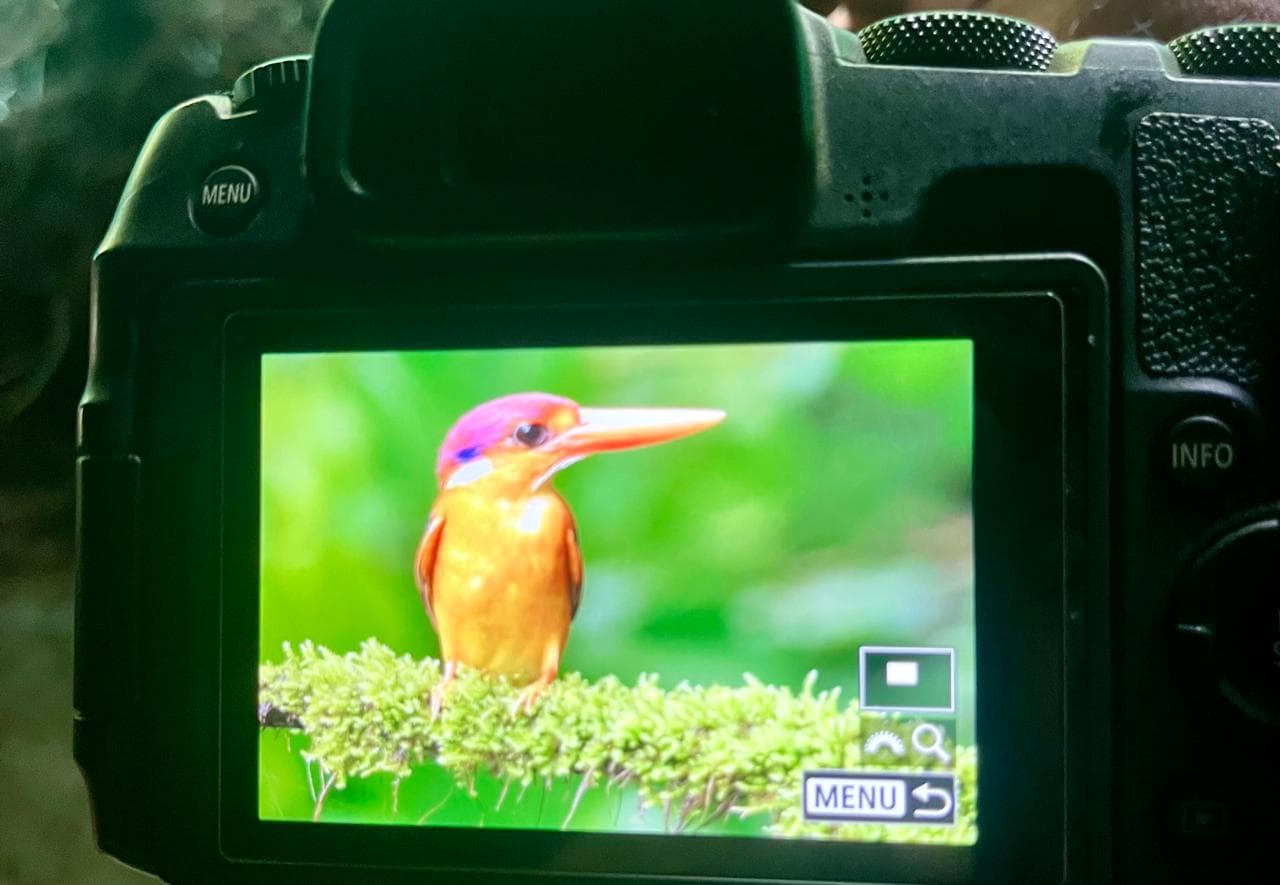
The rear LCD screen of a camera in playback mode, showing a freshly captured frame of an orange and lilac kingfisher on a mossy branch

Day 19, 06:53

Frameconfirmed.
The only review that matters happens here, on a four-inch screen, in the dark, with the subject still ten metres away.

You do not celebrate in a hide. You check the histogram, you check the eye at 100%, you note the time, and then you put your eye back to the viewfinder because the bird might come again and it might come better.

It did not come better. It did not come again at all that morning. But the frame on that little screen was sharp where it needed to be, and that ended nineteen days of arithmetic in about four seconds.

Shutter
1/320 s
Aperture
f/7.1
ISO
4000
Focal
500 mm
Frames
11
Keepers
1

The photograph is four seconds long. The picture is nineteen mornings long. Only one of those is visible.

Konkan, monsoon

Next

The person holdingthe camera.