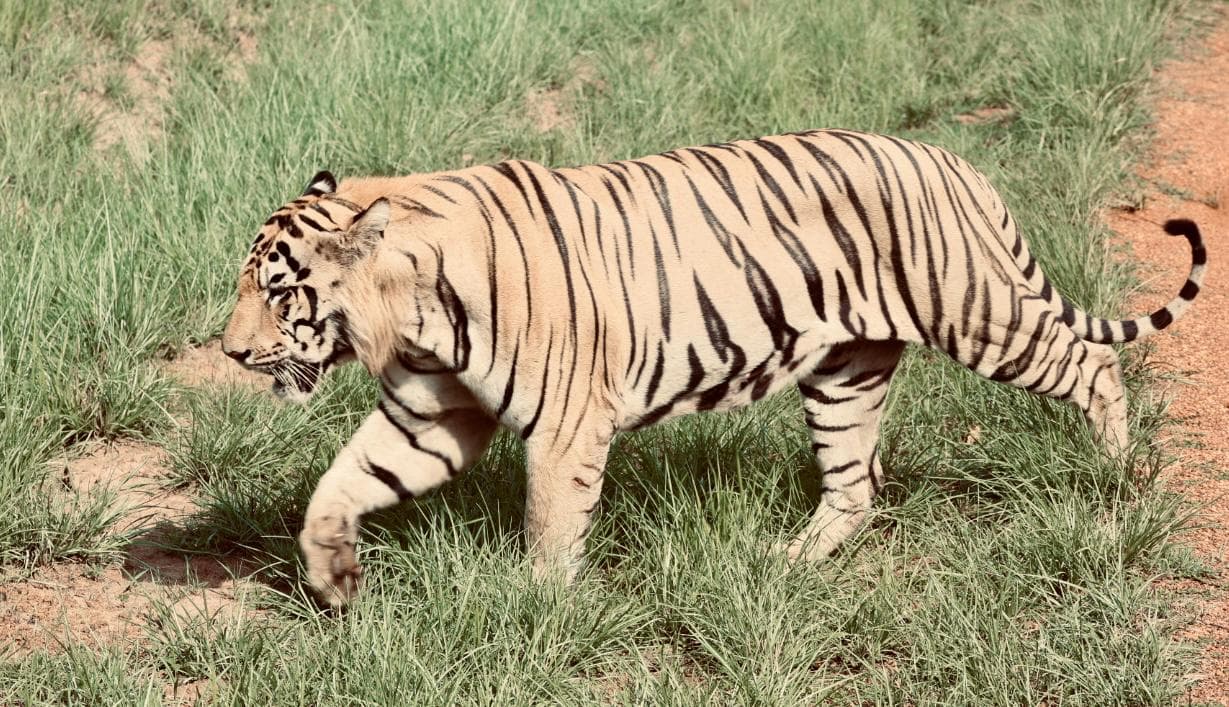
Tadoba-Andhari Tiger Reserve · Maharashtra
Land ofthe tiger.
Maharashtra's oldest national park, 140 km south of Nagpur, where teak forest, bamboo and red laterite hold one of the densest tiger populations on earth.
- Chandrapur, Vidarbha
- 625.4 km²
- 115+
- 1955
The land
The dominant tree is teak, and in the dry months it drops everything — leaving a grey-brown forest floor that crackles under a sambar's hoof from two hundred metres away. Woven through it are crocodile-bark ain, mahua, and stretches of bamboo thicket that ring Tadoba Lake and give the tigers their cover. Rocky outcrops break the canopy; seasonal marshes and open meadows break the teak.
It is that mosaic — not the tiger count alone — that makes Tadoba what it is. Water, grass, thicket and closed forest all sit within a few hundred metres of each other, so prey concentrates, territories compress, and the cats are genuinely visible living their lives rather than crossing a road once and vanishing.
The reserve records roughly 41 species of mammals, 30 of reptiles, over 200 birds and some 74 butterflies. On a good March morning you can watch a tigress at a waterhole, a sloth bear working a termite mound, and a crested serpent eagle calling overhead, without moving the vehicle.
Orientation
- Nagpur — 140 km
- Chandrapur — 45 km
- 1 Oct – 30 Jun
- Year-round
- Morning & afternoon
- Tadoba · Moharli · Kolsa
- 150–350 m elevation
- ~1,150 mm, mostly Jun–Sep
- 0
km² of core
- 0
km² with buffer
- 0+
Tigers
- 0
Year notified
The frames
The Approach
Tigers are the only big cat that genuinely enjoys water. In a Vidarbha May, with the mercury past 45°C, the pools are where the day is decided.
Reading the ground
Prey concentrates where these layers meet. Learn to spot the seam between bamboo thicket and open meadow and you have found the line most tigers in this reserve prefer to walk.
Where to go
The classic
Moharli
The busiest and most productive stretch of the core. Moharli holds a run of waterholes strung along the Andhari, and in the hot months those pools decide everything — where the chital drink, where the langur alarm calls come from, and which tigress is holding the ridge above them. It is where most visitors get their first sighting, and where I have made most of my best frames.
First-time visitors · dependable sightings · big male territories
When to go
Peak tiger season
Brutal, and unmatched. As the temporary pools dry, everything in the reserve funnels down to a handful of permanent waterholes, and tigers spend the middle of the day lying in them. This is when Tadoba earns its reputation — and when you drink four litres of water before lunch and still feel it.
Individuals
Beyond the stripes
- Indian leopard
- Sloth bear
- Dhole (wild dog)
- Gaur
- Sambar
- Chital
- Nilgai
- Marsh crocodile
A tiger that changes what it is doing because of your vehicle is a photograph you should not have taken.
Everything on this page was photographed from a registered safari vehicle on a permitted route, with a forest department guide aboard, inside gate timings. No call playback, no baiting, no off-track driving, no drones.
Tadoba's pressure is real — premium slots sell out months ahead and the popular waterholes can stack up with vehicles. The single most useful thing a visiting photographer can do is book the quieter gates, go in the shoulder season, and be willing to drive away from a crowd.
Next